ChatGPT has changed in a big way
Solving another incredibly nerdy mystery
In this article3 sections
I’ve noticed a small change in the way ChatGPT searches the web. It’s easy to miss, but it could have much bigger consequences for the websites trying to generate business from AI recommendations.
When I ask ChatGPT a question, I typically see two or three search queries and around 40 URLs appear in the search activity. For more complex questions, I’ve seen that climb to about ten searches and 150 URLs. That’s a lot happening between your question and the confident answer that comes back.
Recently, something in those searches caught my attention.
A small change in the queries
I’ve often seen ChatGPT use site:example.com to look for information within a particular website. A query might look like site:ing.com.au ing interest rates 2026.
Lately, I’ve been seeing site.example.com instead. A full stop where I’d expect a colon.
That struck me as odd, so I started probing how ChatGPT was finding its information. The query text alone doesn’t identify the search provider, but it made me wonder whether more of the work was happening through OpenAI’s own search infrastructure.
There’s another interesting signal in Cloudflare’s AI crawl data.
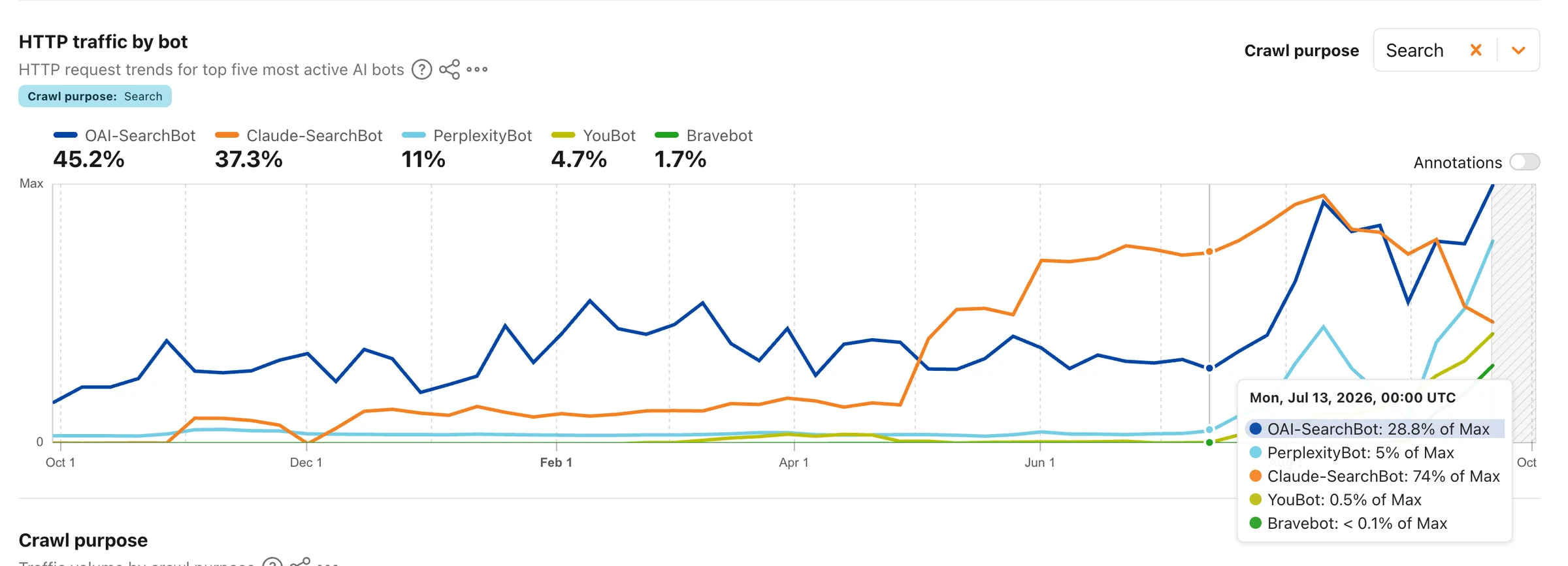
Cloudflare Radar, 52-week view supplied for this article. The blue OAI-SearchBot line rises sharply after July. The vertical scale is normalised, rather than a count of searches.
In this snapshot, requests from OAI-SearchBot rise sharply from July into September. That’s OpenAI’s search crawler: OpenAI describes it as helping surface websites in ChatGPT search.
The data strongly suggests OpenAI is building out its own search engine. The sharp rise in crawling, alongside the changes I’m seeing in ChatGPT’s search behaviour, points in that direction.
Why OpenAI needs its own search engine
That matters well beyond SEO. Relying on a competitor like Google for most of the search results behind ChatGPT’s answers would be a significant product vulnerability. An in-house search engine gives OpenAI more control over its sources, costs and access to information. This is an important part of the product to own.
Why this matters for your website
A different search engine can mean different search results, and therefore different answers. If the sources feeding ChatGPT change, the frequency with which your website gets cited could change too. So could what gets a page considered in the first place.
I’m already noticing small differences. A Coles carbonara florentine recipe appeared with an empty title in the ChatGPT search output I was inspecting. Google showed a perfectly readable title for the same recipe.
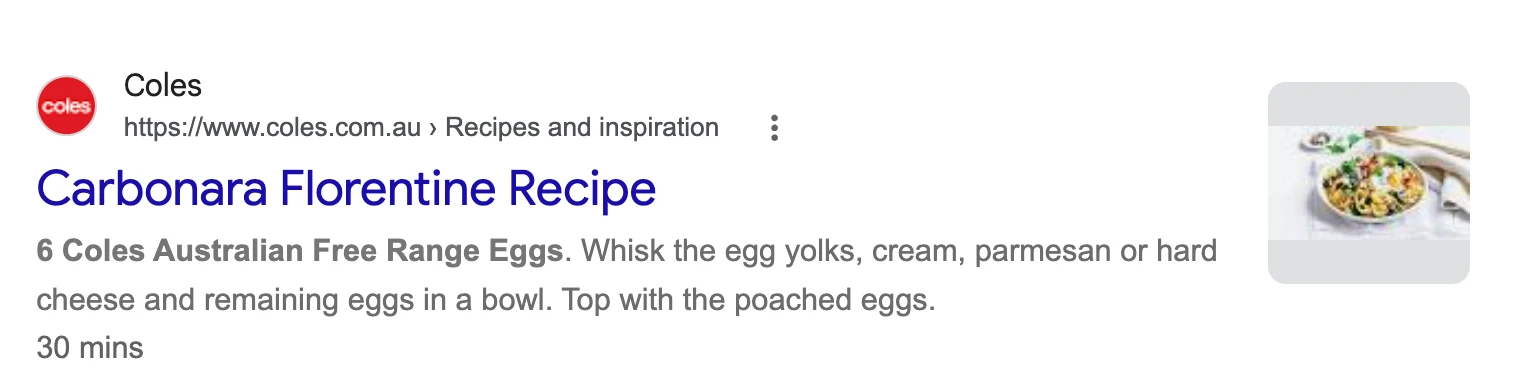
Google’s result for the Coles recipe. In the ChatGPT search output I inspected, the title was empty.
One possible explanation is a difference in JavaScript rendering. But a missing title could also come from how the page was extracted or cached. And Google can generate its result titles from several sources, not just the page’s title tag. This example shows a difference in output; it doesn’t tell us the cause.
For a website owner, the practical point is simple: don’t assume that looking good in Google means your content is being read and represented the same way in ChatGPT. Check the actual answers and sources for questions your customers ask. If something looks wrong, inspect what a crawler can retrieve from the page, including its title and main content.
I’ll be watching how ChatGPT’s search function operates over the next few months. If you’d like to follow along, join my email newsletter. I’ll share what I find.
About the Author

Sam Penny

